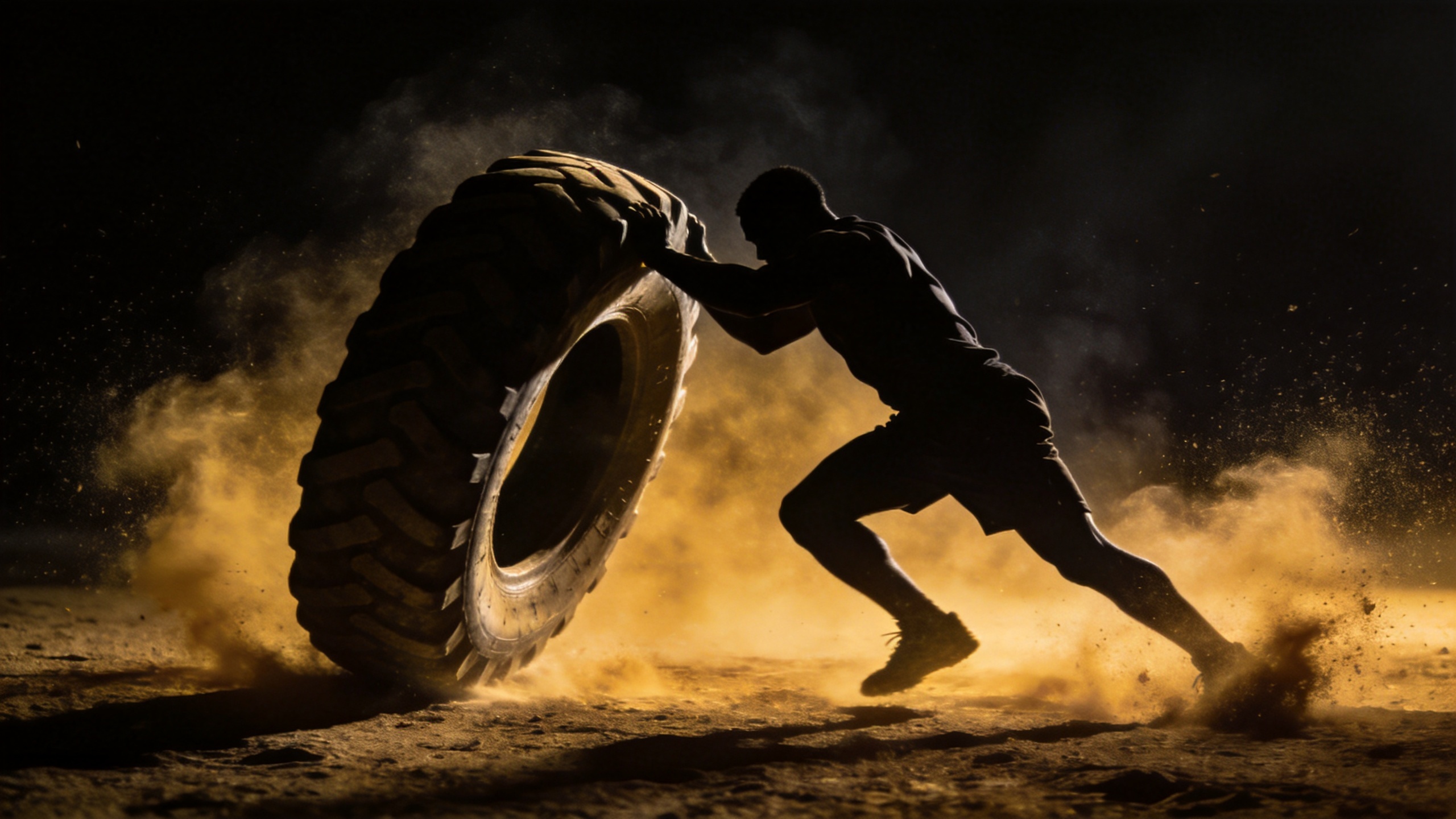
You have seen it: a fighter looks brilliant for two rounds — sharp, fast, dangerous — and then, as if a switch flips, the hands drop, the feet stop, and the same athlete is suddenly hanging on for survival. That collapse is called gassing out, and understanding it explains more upsets than almost anything else in the sport.
What "gassing out" actually is
Gassing out is not just being tired — it is a near-total system failure. When a fighter exceeds what their conditioning can supply, the body can no longer clear the byproducts of exertion fast enough. The muscles flood, the limbs feel like concrete, and even simple movements become a struggle. Worse, the brain panics: a gassed fighter often starts making frantic, sloppy decisions precisely because their body is screaming that it is in danger.
The cruel part is how it compounds. A gassed fighter cannot move their head, so they get hit; getting hit drains them further; and a tired fighter has a far more fragile chin. Fatigue is the on-ramp to almost every late finish in the sport.
The hidden things that drain the tank
Fans assume gassing out just means a fighter "did not train hard enough." Sometimes. But the real culprits are usually subtler:
- The adrenaline dump. Fight-night nerves flood the body with adrenaline, which spikes the heart rate and burns energy at a frightening rate before the fight even starts. Inexperienced fighters often gas in round one purely from this.
- Overcommitting early. A fighter who throws everything into a fast start — chasing a finish, swinging for the fences — can empty the tank chasing a knockout that never comes.
- The weight cut. A brutal weight cut leaves the body dehydrated and depleted going into fight night. A fighter who cut too hard can look fine for one round and fall off a cliff, because the fuel simply was not there to begin with.
- Wrestling in heavy clothes. Grappling is the most exhausting thing in fighting. Carrying an opponent's weight, scrambling, and fighting for position burns through a gas tank faster than any striking exchange — which is why getting controlled on the mat is so draining.
Aerobic vs anaerobic: the two engines
A fighter actually runs on two systems. The anaerobic engine fuels short, explosive bursts — a flurry, a takedown, a scramble — but it fatigues fast and needs recovery. The aerobic engine is the deep, steady base that lets a fighter recover between those bursts and keep a high pace for 15 or 25 minutes. Great MMA cardio is not just having a big aerobic base; it is being able to recover quickly after every explosive exchange so you are ready for the next one. A fighter with a great gas tank is really a fighter who recovers faster than their opponent.
Why cardio quietly wins fights
Conditioning is the ultimate force multiplier, because it makes every other skill usable in round three. The most skilled striker in the world is harmless if they are too tired to throw; the best wrestler cannot shoot if their legs are gone. A fighter with a championship gas tank does not just outlast opponents — they break them, applying relentless pressure until the other fighter's skills crumble under fatigue. That is why the best cardio fighters in MMA rack up so many late finishes and decisions: they are still fighting at full capacity when everyone else is surviving.
See pace and stamina play out
Cardio and durability are woven into how every matchup unfolds in our fight simulator — run a fast-starting finisher against a relentless pressure fighter and watch how often the fight swings in the championship rounds. Then build a fighter with an engine that never quits in Build a Fighter, and grind out a full career — managing training, recovery, and pace — in Career Mode.
Once you start watching for the gas tank, you will predict the back half of fights better than the commentators. The fighter who is breathing through their nose in round two is usually the one still standing in round three.