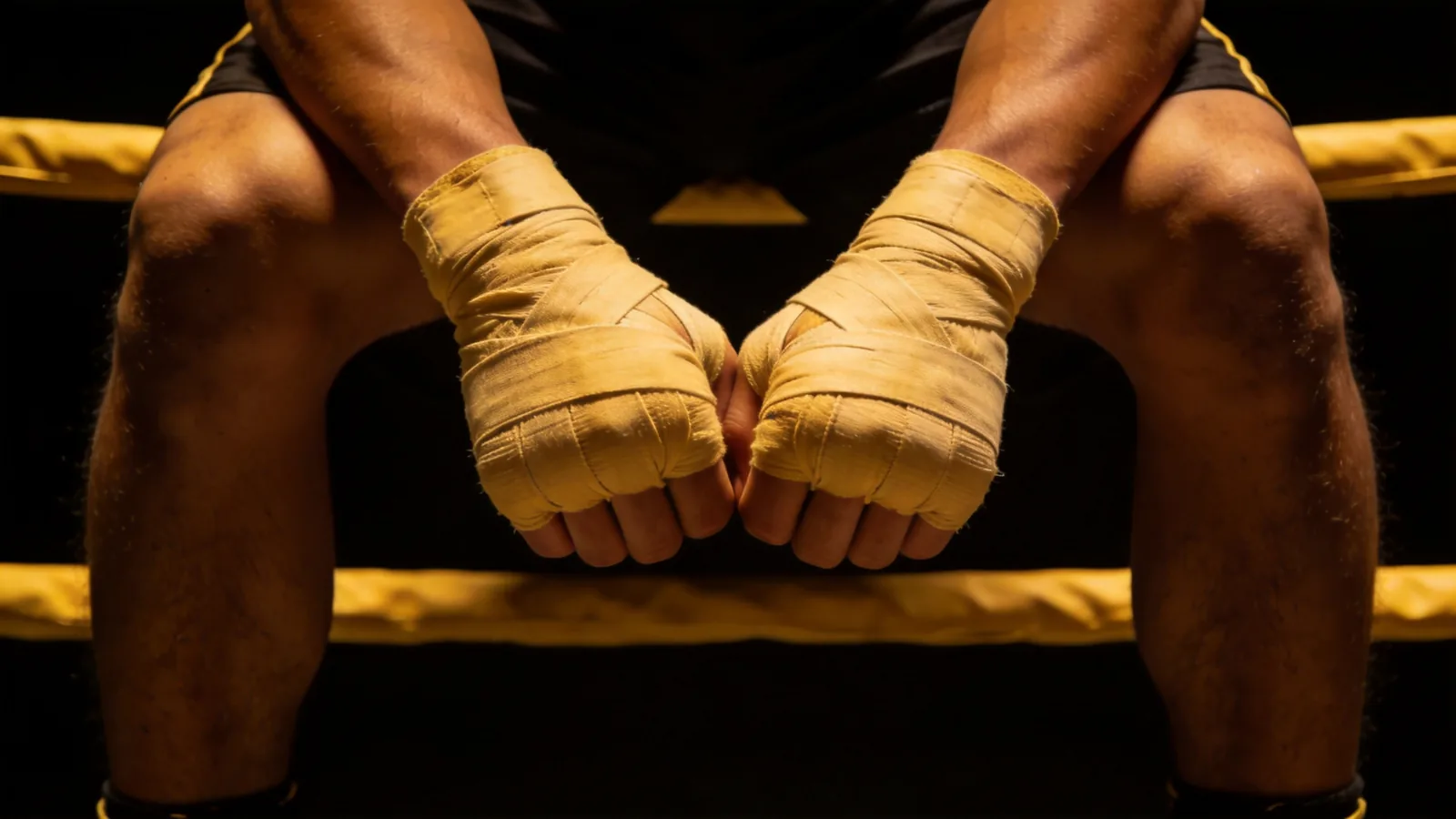
The horn sounds. The fighter walks back, sometimes briskly, sometimes on legs that have clearly had enough, and drops onto a stool that appeared out of nowhere. For the next sixty seconds three people lean over the cage and go to work: one talking, one wiping, one pressing something cold against a cheekbone that is starting to swell shut. Then the stool vanishes, the horn sounds again, and the fighter walks back out either fixed or not.
That minute is one of the most underrated battlegrounds in the sport. Fights genuinely turn on it. Here is what is actually happening in there.
Sixty seconds, three jobs
A corner has roughly a minute to do three things at once. Get the fighter's body back, repair whatever is broken on the outside, and deliver the single most important piece of information of the night. There is no time for a speech. Everything is triage.
Watch a good corner and you notice the minute has a rhythm. The first seconds are pure recovery: stool in, mouthpiece out, deep breaths, water. The middle stretch is the instruction, delivered while the cutman works. The final seconds are the send-off, mouthpiece back in, one last line, stool out. A disorganized corner wastes half the minute deciding who talks. A great one runs it like a pit stop.
The body: getting the engine back
The first priority is oxygen. A fighter comes back from a hard round with his heart rate somewhere north of reason, and the corner's first job is to bring it down. Seat him, straighten his posture so the lungs can actually fill, get him breathing through the nose instead of gulping air. Water on the mouth, ice on the back of the neck, and sometimes an enswell, that small cold steel iron, pressed against a swelling eye to keep the vision open.
It sounds basic. It is also the difference between a fighter who starts the next round recovered and one who starts it still drowning. Conditioning does most of the work, but the corner decides how much of the minute actually becomes recovery, which is why cardio and corner craft are so intertwined.
The cutman: a career saved in forty seconds
If there is blood, a specialist takes over. The cutman has less than a minute to slow a cut with pressure, adrenaline swabs and petroleum jelly, and the stakes are bigger than cosmetics. A cut near the eye that keeps bleeding into a fighter's vision is exactly the kind of thing a ringside doctor will stop a fight over. A great cutman has quietly saved title reigns: the fight that continued because the blood stopped, the champion who kept a belt because someone with cold hands and a cotton swab did forty seconds of perfect work. It counts as a TKO if the doctor waves it off, one of the stranger ways a fight can end, decided entirely outside the cage.
The one sentence that wins fights
Here is the part that separates legendary corners from loud ones. The fighter on the stool is exhausted, flooded with adrenaline, and has been getting punched in the head for five minutes. He can absorb roughly one idea. A panicked corner gives him nine.
The best corners in the sport are famous for the opposite: calm, specific, ruthlessly brief. Not "you have to want it more," which is noise. Something a tired brain can actually use:
- "He drops his right hand every time he kicks. Counter over the top."
- "You are winning the striking. Stop shooting takedowns."
- "You lost that round. We need this one, get the takedown early."
- "Thirty seconds of pressure and he breaks. He is more tired than you."
Notice what those have in common. Each one is a single decision, made for the fighter, by someone watching with clear eyes. The fighter cannot see the pattern because he is inside it. The corner can. That outside view, compressed into one sentence, is worth more than any pep talk, and it is why fighters talk about trusting their corner the way pilots talk about trusting their instruments. It is fight IQ, outsourced to someone with a better view.
The towel
The corner also carries the heaviest responsibility in combat sports: knowing when it is over. A fighter will almost never quit on the stool. Pride, adrenaline and a lifetime of being told to push through all argue against it. So the sport hands that decision to the people who love the fighter most, and asks them to make it coldly.
Throwing the towel is a brutal call. Do it too early and the fighter may never forgive you. Do it too late and you have let someone you care about absorb damage that was never going to buy him anything. The corners who get it right are the ones who decided before the fight what "enough" looks like, and who care more about the fighter's next ten years than the next ten seconds. Some of the most respected men in the sport are respected precisely for the towels they threw, not the ones they held.
The loneliest sport, except it isn't
Fighting looks like the loneliest job in the world. One person, locked in a cage with a problem. But listen to any post-fight interview and the first thank-you almost always goes to the corner. The right voice at the right moment reverses fights: the adjustment that solved a southpaw, the reminder that the takedown was there all night, the calm that talked a champion out of panicking after a bad round.
That feeling, seeing the fight clearly and making the call that changes it, is exactly what our games are built around. Make the corner's call mid-fight in the MMA Career Simulator, where your round-three instruction genuinely changes how the fight ends, or run any matchup in the fight simulator and see whether your read holds up. Once you have sat in the corner, even virtually, you never watch that sixty seconds the same way again.