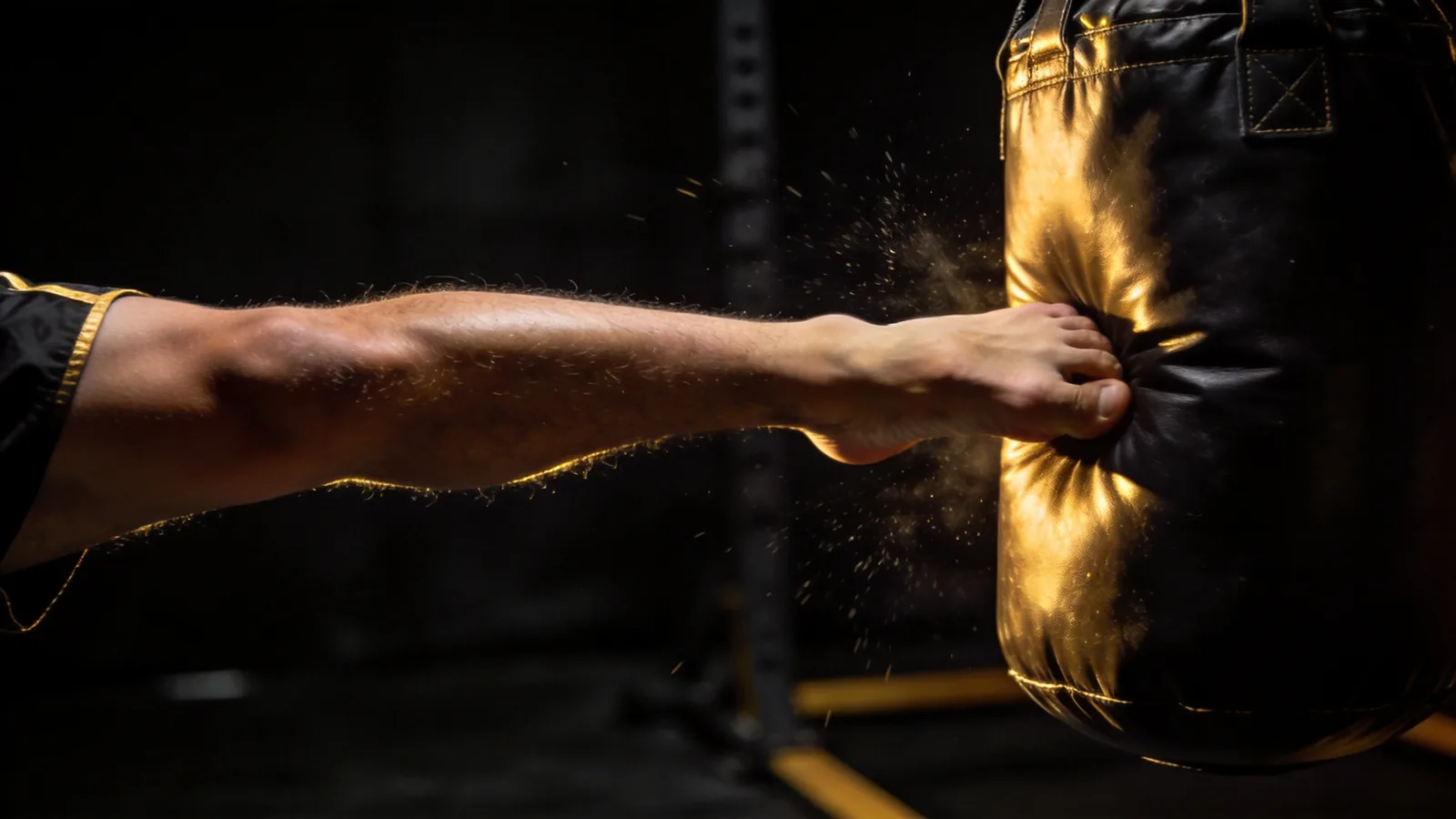
If you have watched even one UFC event, you have seen it: one fighter on top, raining down punches and elbows while the other covers up and tries to survive. That is ground and pound — often shortened to "GnP" — and it is one of the most effective, and most brutal, ways to win a fight in MMA. Here is how it actually works.
The simple definition
Ground and pound is exactly what it sounds like: taking the fight to the floor (the "ground") and then striking the opponent (the "pound"). It is the bridge between MMA's two worlds — wrestling and striking — and it is what makes the sport so different from both. A pure wrestler controls; a pure boxer hits; the ground-and-pound specialist does both at once, using positional dominance to land strikes the opponent cannot escape or answer.
Why it is so effective
On the feet, a fighter who eats a hard shot can move, clinch, or circle away to recover. On the ground, pinned under an opponent's weight, those escape valves disappear. That is the core of why GnP wins fights:
- The defender cannot retreat. There is nowhere to go. Every second is spent absorbing or blocking, never resetting.
- Gravity adds to the power. Strikes thrown downward carry bodyweight behind them, and the opponent's head is often trapped against the canvas with nowhere to give.
- It forces bad choices. Cover up and you eat unanswered shots and lose the round; open up to escape and you expose yourself to a finish. Either way, the top fighter wins.
This is also why it scores so well with the judges. Sustained ground-and-pound is the textbook picture of "effective striking and grappling" — the top criterion in how UFC judging works — and a dominant round of it can even earn a rare 10–8.
Position is everything
Not all top positions are equal. The danger of ground and pound scales directly with control:
- Full mount — sitting on the opponent's torso. The most devastating position in the sport: full leverage, full visibility, and the opponent almost helpless.
- Side control — pinning across the body. Heavy and suffocating, great for elbows and knees to the body.
- In the guard — between the opponent's legs. The least dominant, because the bottom fighter can control posture and limit power, which is exactly why passing the guard to mount is such a prized skill.
This is why the best ground-and-pound fighters are elite grapplers first. The punishment is only as good as the position, and getting to mount against a skilled opponent is a fight all its own.
How fighters defend it
Surviving on the bottom is a genuine skill, not just toughness. The defensive toolkit includes the guard (using the legs to control and break the top fighter's posture so they cannot generate power), framing to create space, hip escapes to slide out and stand back up, and constant scrambling to deny the top fighter a stable base. A fighter who is comfortable off their back is far harder to finish — sometimes they even sweep the position and end up on top themselves.
The takedown is the whole setup
None of this happens without first getting the fight to the ground, which is why ground and pound and wrestling are inseparable. The fighters who dominate with GnP are usually the same names who control where the fight happens — the very edge we covered in the best wrestlers and grapplers in MMA and in the case for a wrestling base. Take away the takedown and the most fearsome ground striker never gets to use their best weapon.
See control turn into damage
Position, control, and striking all feed into how a fight unfolds in our fight simulator — run a dominant wrestler against a dangerous striker with shaky takedown defense and watch how often the fight ends on the mat. Then build your own grinding top-control specialist in Build a Fighter and take them on a run in Career Mode.
Next time you see a fighter shoot for a takedown, do not tune out for the "boring" part. That takedown is often the opening move of the most decisive sequence in the entire fight.