Most "how to play" pages are a wall of tips with nothing behind them. This one is an actual run. I opened MMA Career mode, committed to a striker from the very first screen, and played a full career through to a world title, screenshotting every real decision along the way. If you have never touched the game, follow along and you'll have a champion of your own inside twenty minutes. If you've bounced off it before, this is the plan that turns those early losses into finishes.
The whole idea of a striker build is simple: you want to be the one who ends fights, not the one grinding out decisions. That means pouring every point of growth into striking, power and speed, and learning the one corner call that wins you fights you were losing. We'll get to that call. It's the best moment in the game.

1. Draft the right prospect
You start by choosing one of three random newborns. Each has a country, a family background and, this is the part people skip, a set of hidden-potential bars. The solid part of each bar is where the stat sits now; the striped part is the ceiling it can grow to. You're not picking who's good today. You're picking who can become great.
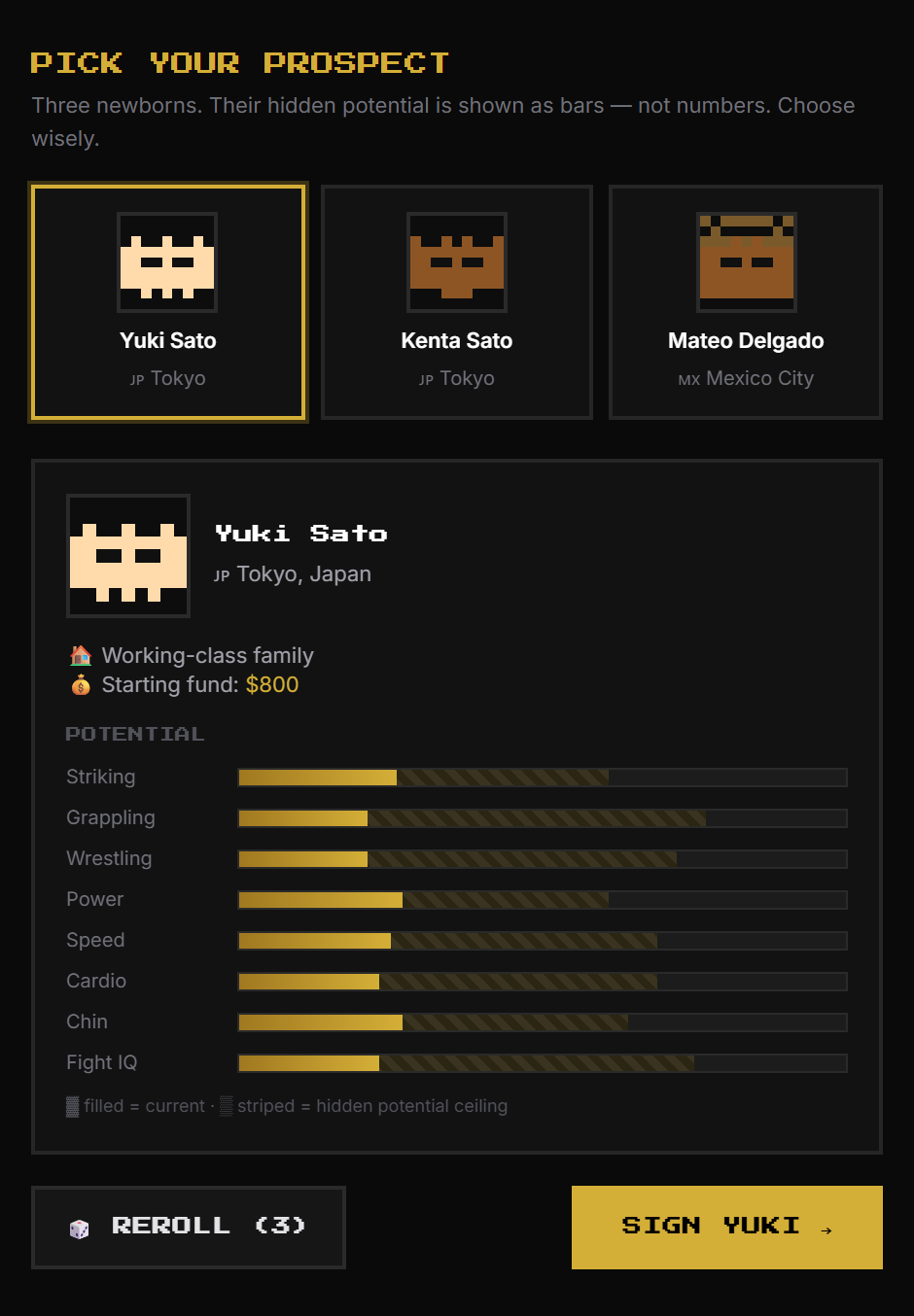
I took Yuki Sato out of Tokyo because the Striking, Power and Speed ceilings all ran long. Don't love your three options? The Reroll button gives you a fresh trio, but you only get a handful, so spend them chasing a specific profile rather than a slightly nicer face. A Dagestani prospect will usually hide freakish wrestling potential; a striker tends to show up with the top three bars I just mentioned.
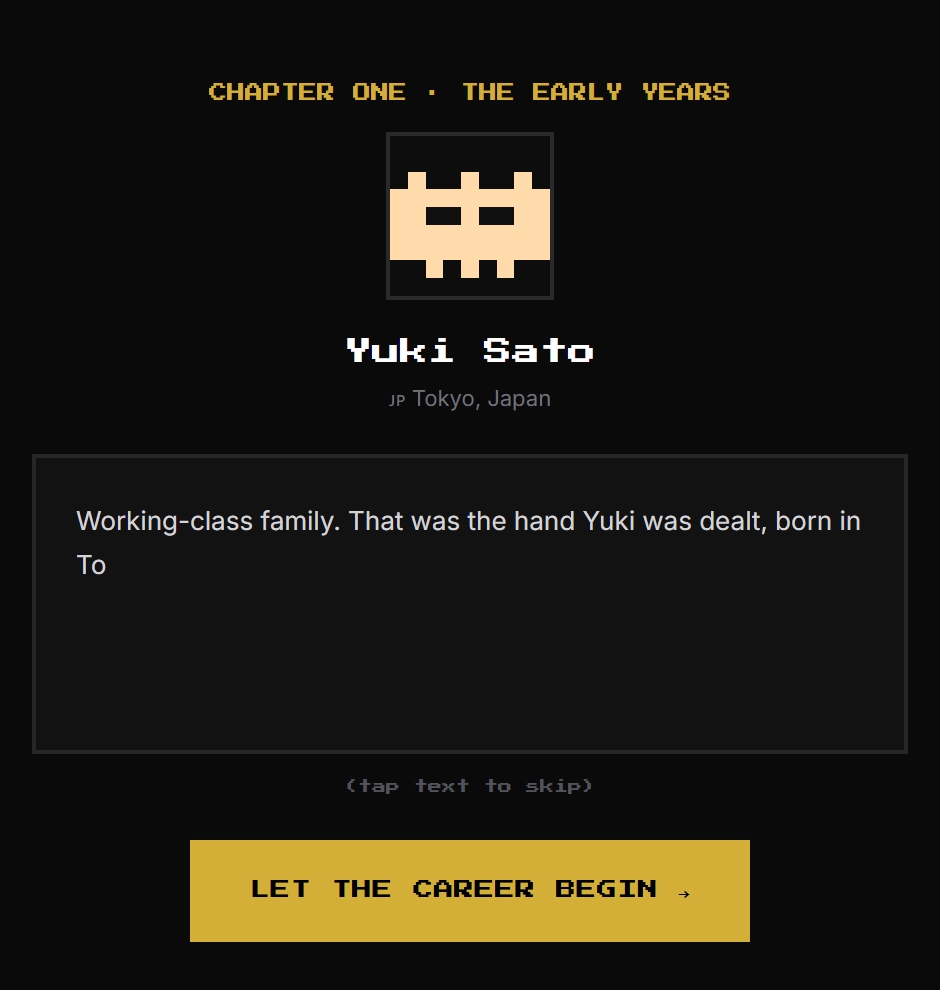
2. Raise a striker through the amateur years
Now you live the childhood. Each year throws a life event at you (a sport to try, a coach to hire, a camp to join) and every option lists what it trains. This is where the build is actually won. Whenever a choice offers striking, boxing, power or hands, you take it. Ignore the shiny wrestling and grappling options no matter how good the write-up sounds. Every point you spend outside your lane is a point your striker won't have when it matters.
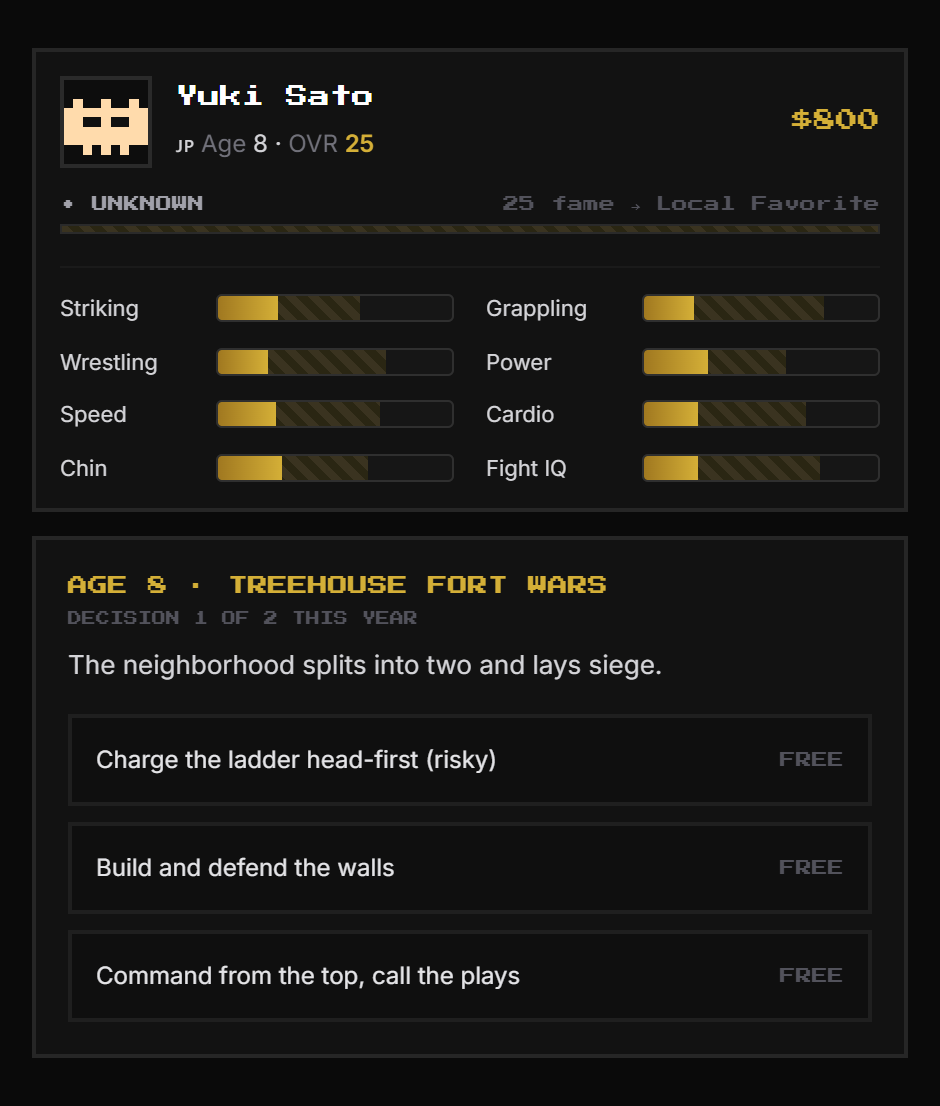
Money matters here too. Some options cost cash, some earn it, but early on you prioritise the training over the payday. You can't spend a bank balance in the cage.
3. Choose your base at 15
Around age 15 the game stops you for the single most important choice of the amateur run: your base martial art. This is your foundation, it's permanent, and it dumps a big one-time boost into whatever discipline you pick.
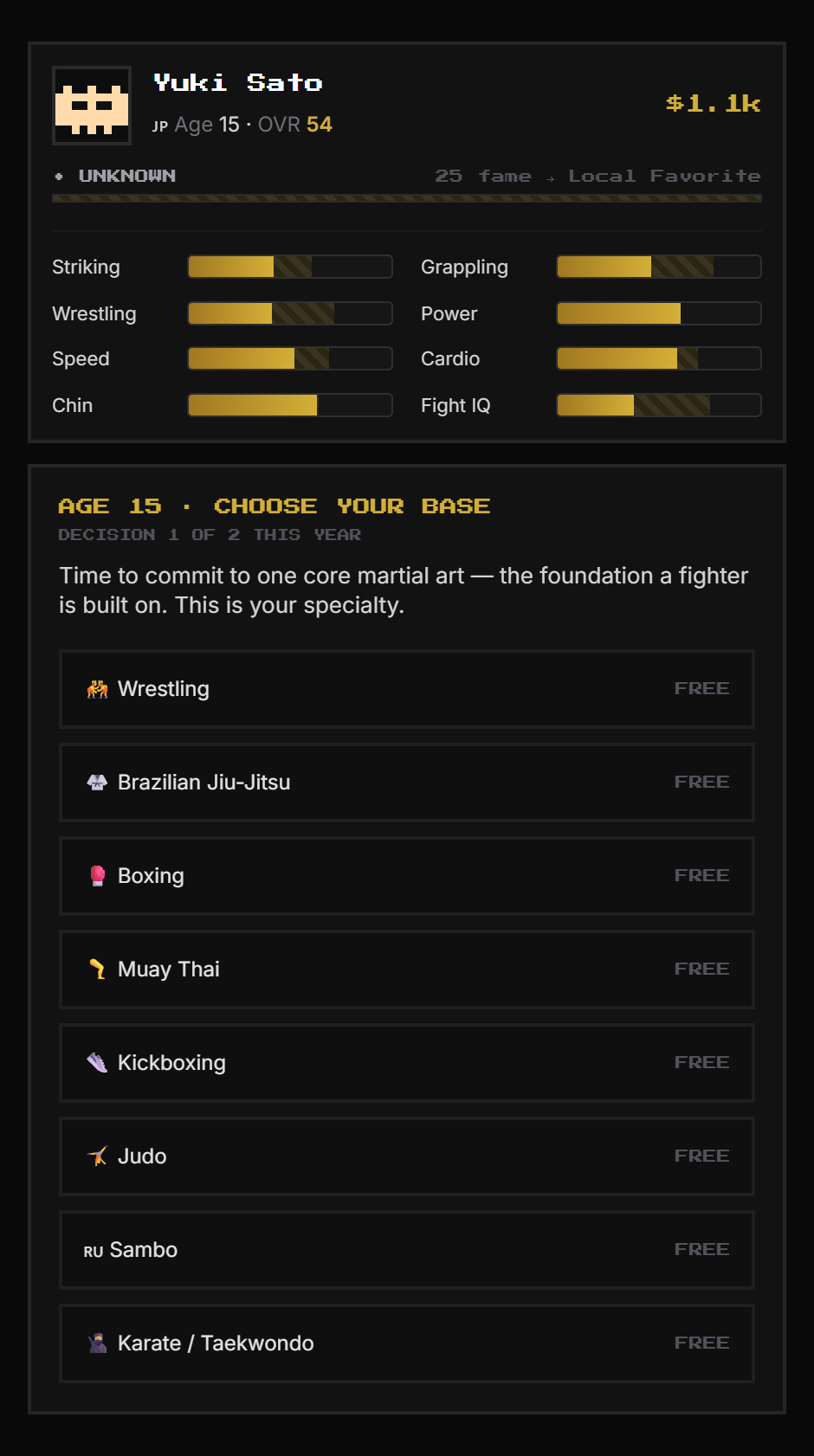
For a striker there are really only two answers. Boxing loads striking, speed and power, the cleanest fit for a knockout artist. Muay Thai trades a little speed for cardio and gives you the leg kicks that quietly wreck opponents over three rounds. I took Boxing. Wrestling and BJJ are traps for this build; they're excellent, but they build a different fighter. If you want to understand what each base actually becomes, our breakdown of MMA fighting styles is the companion read.
4. Turn pro
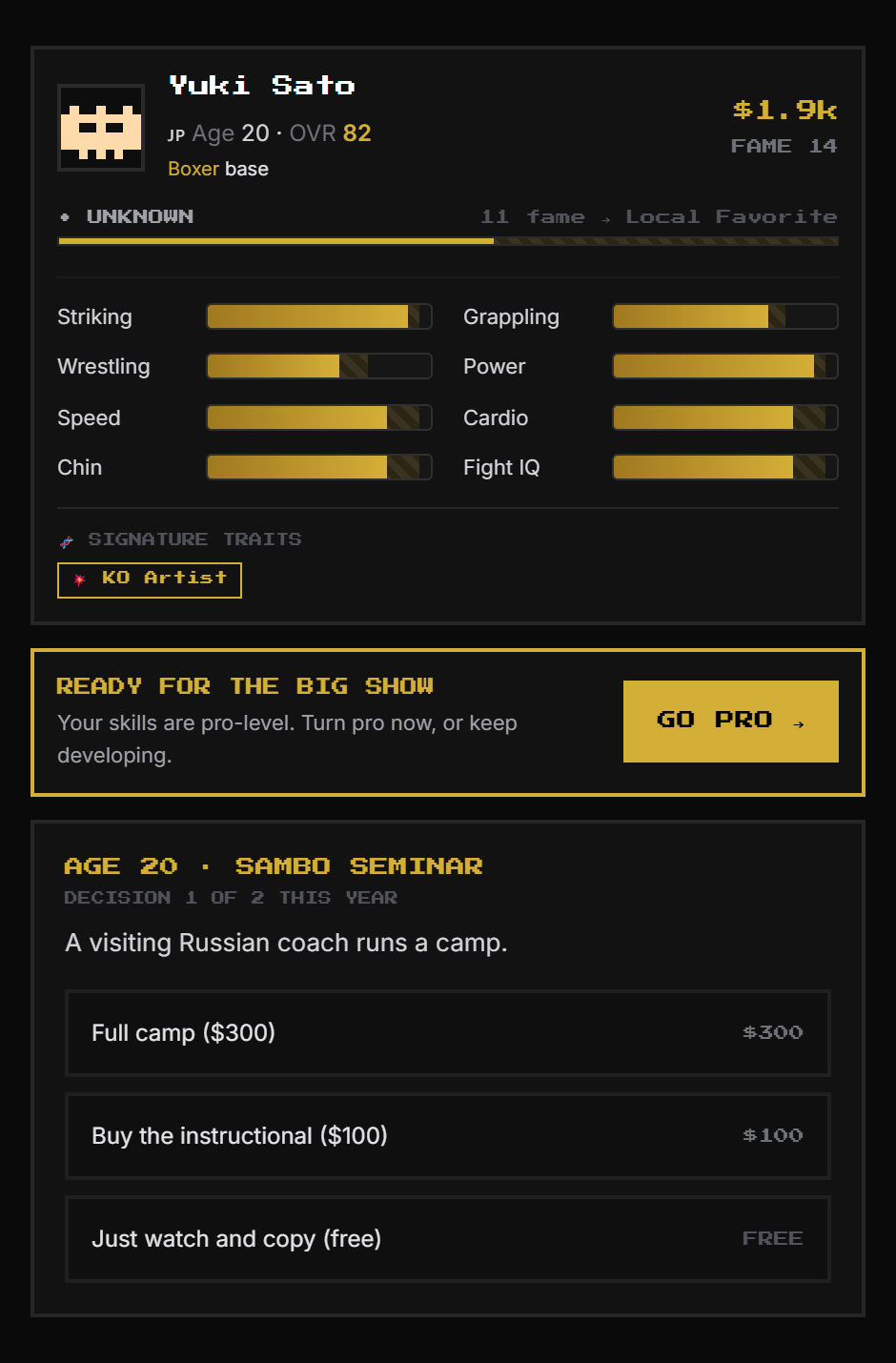
Keep taking your striking options and the bars keep filling. Once your fighter is at least 20 and the overall rating hits pro level, a gold Ready for the big show card appears with a GO PRO button. You can jump the moment it shows, or stay amateur a little longer to walk in even sharper.
5. The pro dashboard: fight, train, or spend
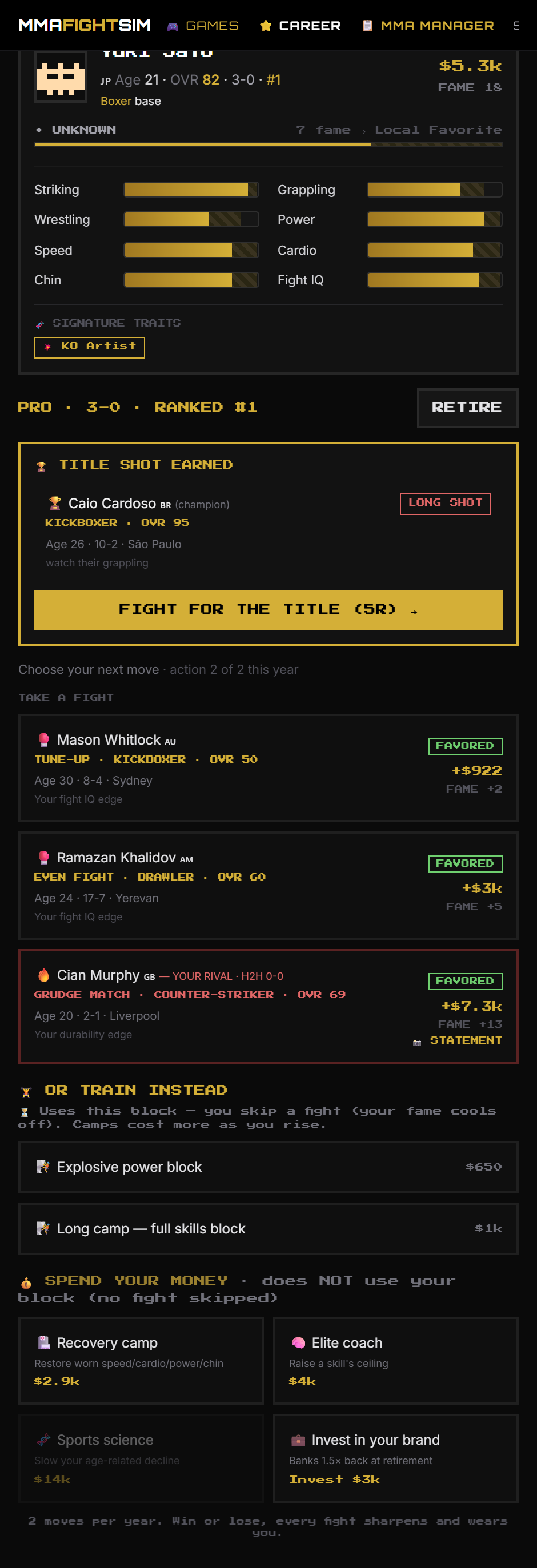
Turning pro opens the hub you'll live in for the rest of the career. Every year you get two moves, and each move is a decision between three things: take a fight, train to raise a stat, or spend money on recovery, coaching and your brand. Fights pay you and build your record; training skips a fight and cools your fame but sharpens you; the money options don't burn a move at all.
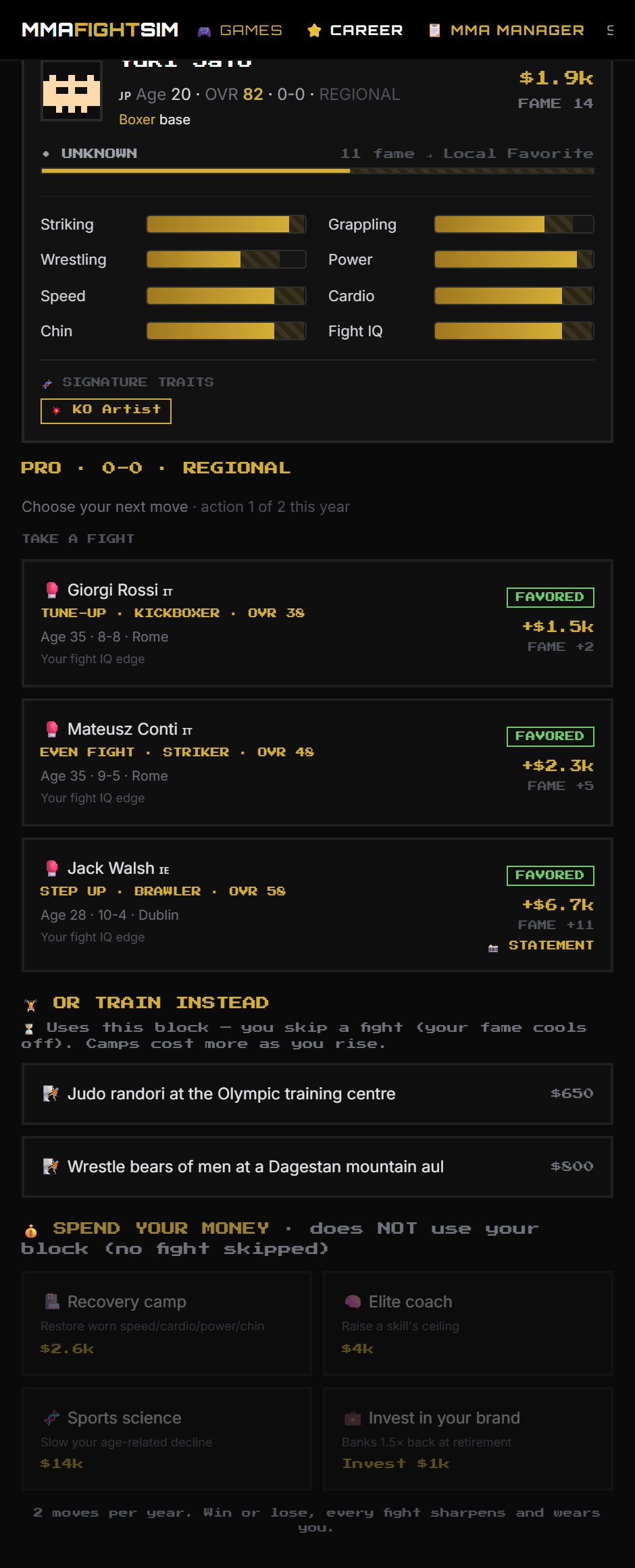
The rule of thumb: if you're favoured, fight. A striker who's already pro-level doesn't need much camp time. You need reps, wins and fame. Read the odds tag on each opponent, take the fights where you have the edge, and only train when a specific stat is dragging. Win enough on the regional scene and the big show comes calling with a contract; sign it and you enter the official rankings, then start climbing. If you're fuzzy on that ladder, here's how the rankings actually work.
6. Fight night, round by round
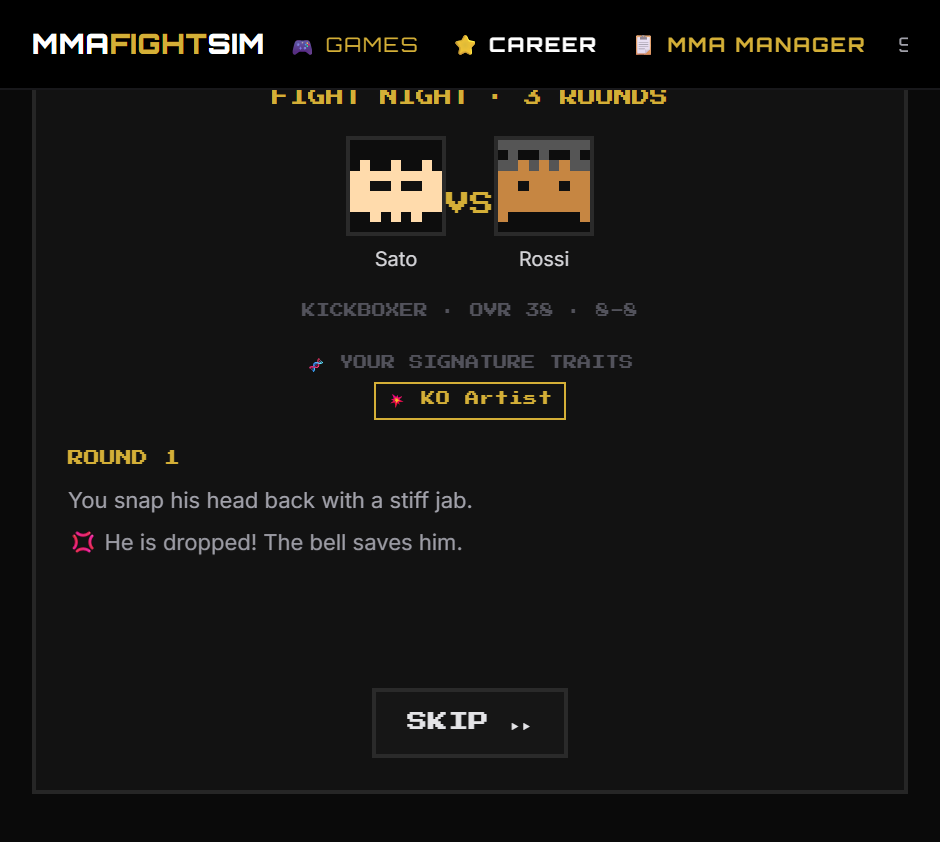
Take a fight and it plays out live, round by round, with real commentary as it goes. You watch your jab snap heads back, you watch the scorecard tick over, and win or lose, every fight sharpens one stat and wears down another.
7. The best moment in the game: Swing for the KO
Here's the payoff, and the reason strikers are so fun to run. Before the final round, your coach grabs you and asks what you're doing out there. You get a set of plans, each tagged with where your edge is: go for the kill, stick to the game plan, chop the lead leg, and so on.
But there's a special one. When you're losing on the cards, and only then, the fourth option becomes 🎲 Swing for the KO. It's all-or-nothing: you throw defence in the bin for a huge finish chance while leaving yourself wide open. A decision is already gone, so the math is easy — you take the swing.
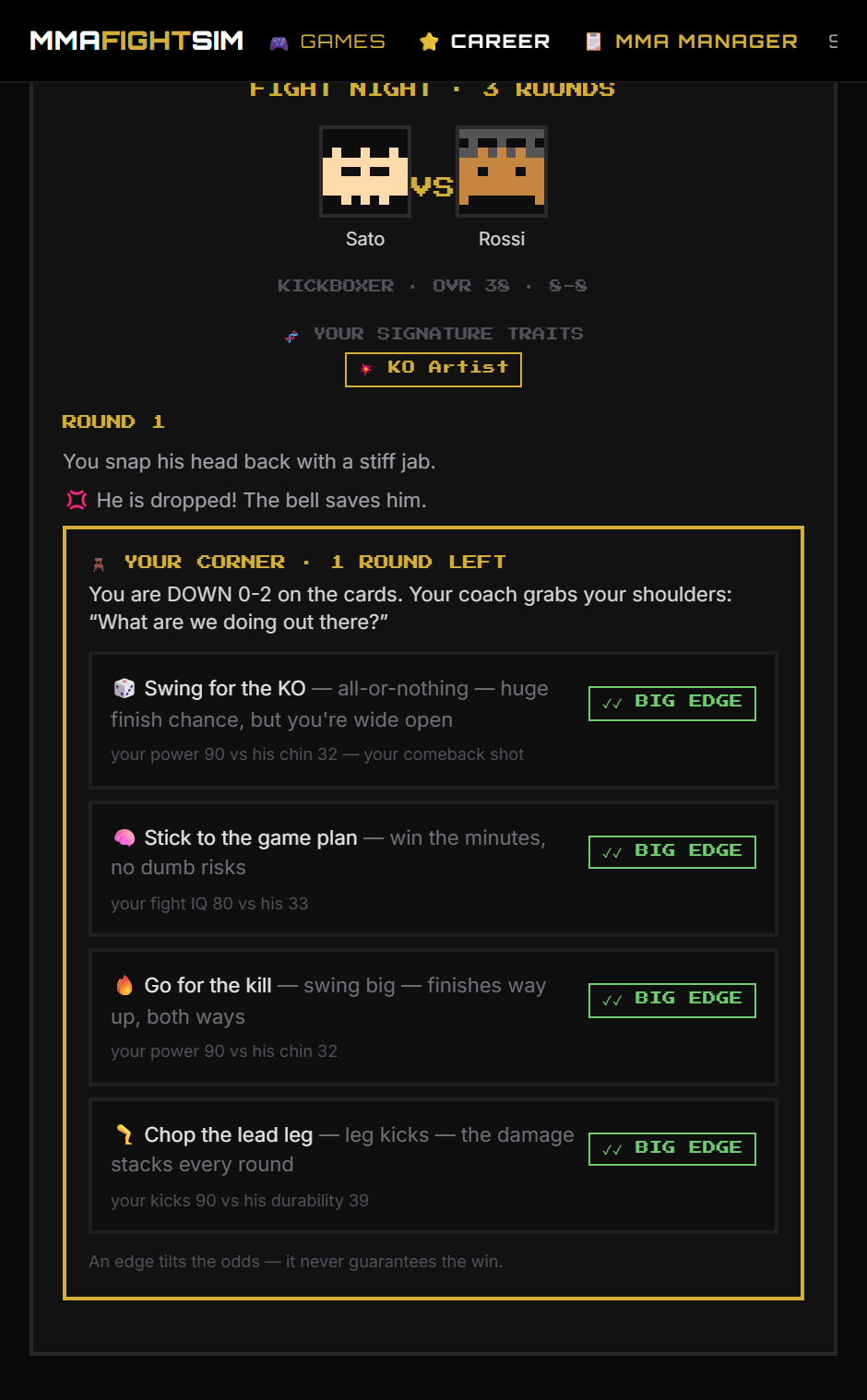
This is why the whole striker build exists. All those amateur choices poured into power and striking turn into a comeback shot that a wrestler simply doesn't have. I was down two rounds to none, picked the swing, and my fighter, who'd been getting outpointed all night, landed the one that mattered.
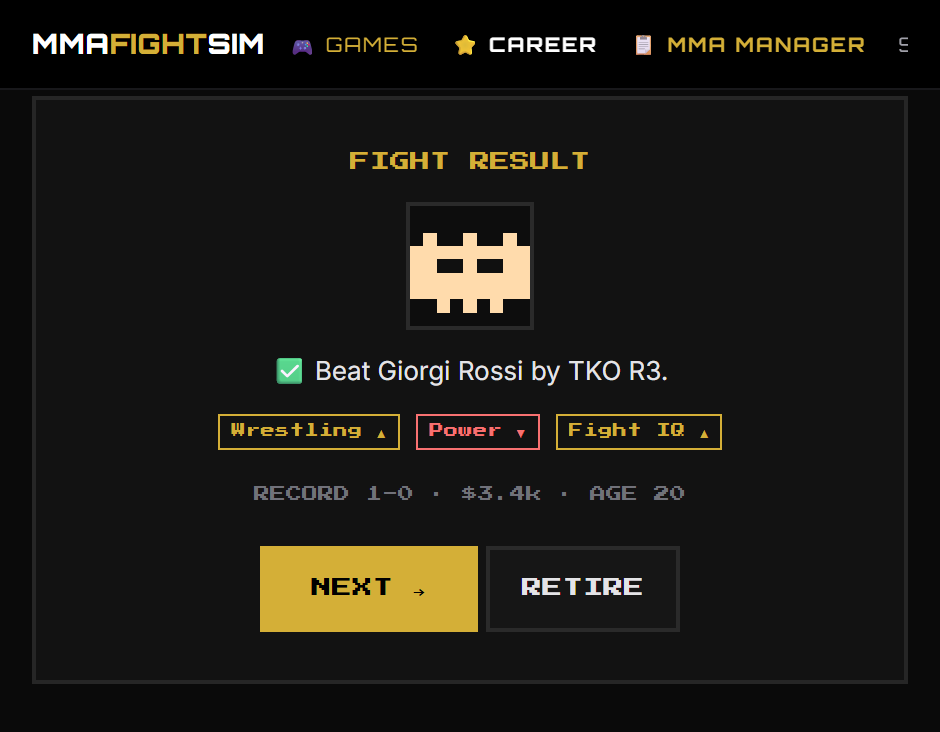
One honest word of warning, because the game is fair about it: the swing is a gamble, not a cheat code. It hands you a real finish chance from behind, but it can just as easily get you finished. That's the trade. Use it when a decision is lost and it's pure upside; use it when you're winning and you're throwing away a fight. The tag on the button never lies — an edge tilts the odds, it never guarantees the win. If you want the theory behind reading these moments, fight IQ in MMA is basically this decision, over and over.
8. Stack wins and earn the title shot
Keep winning and the machine rewards it — bigger purses, more fame, a climbing rank. Statement wins over ranked opponents trigger breakthroughs that permanently level you up. Once you're ranked #1 or #2, the gold title shot card appears at the top of the hub.
9. Win the belt
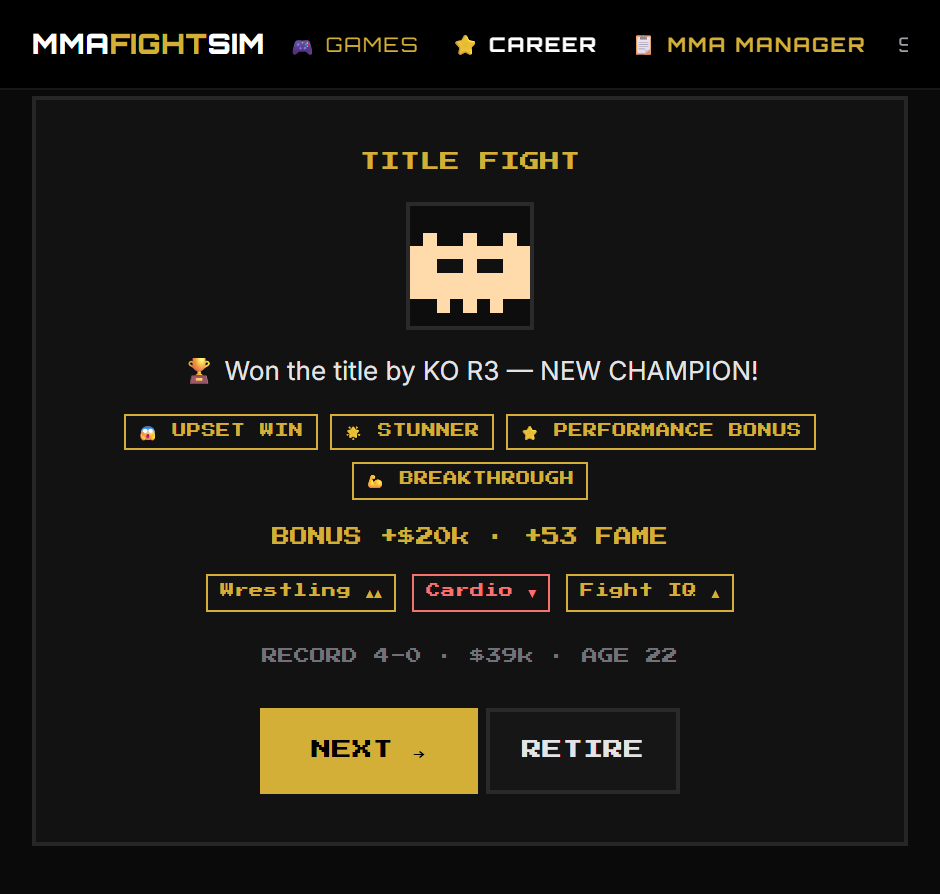
Title fights are five rounds instead of three, which gives your striker two extra rounds to find the finish. Trust the corner tags, and if you slip behind, you already know the plan. I closed the show with a third-round knockout.
10. Retire, and see who you became
You could defend the belt and chase a second-division superfight to become champ-champ. Or you can walk away on top. When you retire, the game grades the whole career and tells you the best part: which real fighter you fought most like.
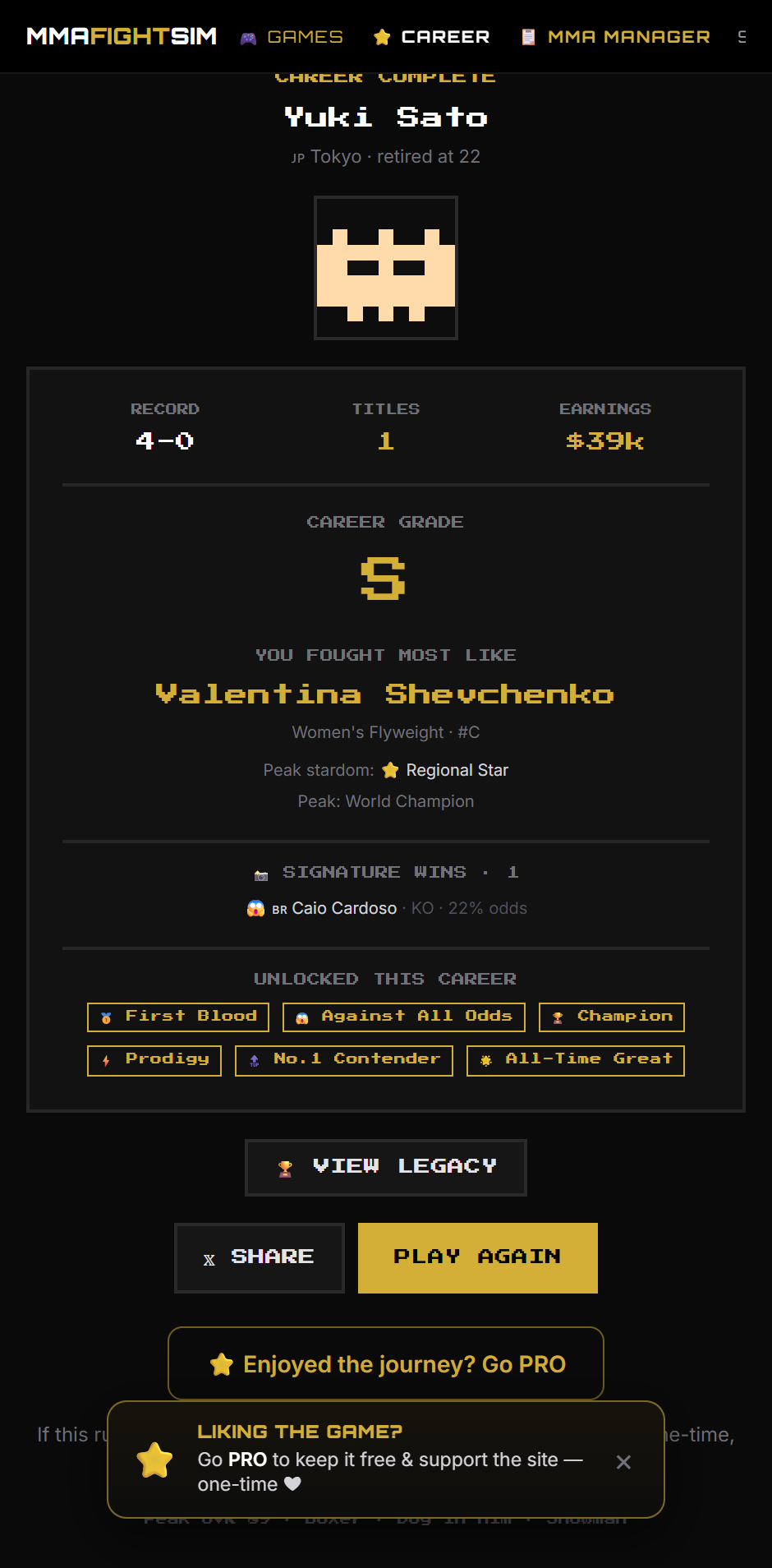
Undefeated, one title, grade S, and a style the engine matched to Valentina Shevchenko. Different run, different comparison, because the fighter you're measured against comes straight out of the stat profile you built, which is a quietly clever way of telling you what kind of fighter you actually made.
The short version
- Draft for ceilings. Long Striking, Power and Speed bars — the striped part, not the filled part.
- Stay in your lane as an amateur. Take striking, boxing and power at every life event; skip the grappling detours.
- Base = Boxing or Muay Thai. It's permanent and it's the biggest single boost you'll get.
- Fight when favoured, train only to fix a weak stat. Reps and wins beat endless camp.
- Swing for the KO only when the decision is lost. It's your comeback shot, never your default.
That's a whole career in one sitting. The run above took one prospect from a working-class kid in Tokyo to an undefeated champion, and the only "strategy" was committing to a striker and knowing when to gamble. Your draft will be different, your corner calls will be different, and the fighter you're compared to at the end will be your own. Open Career mode and go build one.