The three numbers in every contract
UFC pay starts with a simple structure: show money, a win bonus, and the chance at a performance bonus. Show money is guaranteed the moment you step on the scale and fight. The win bonus, usually an amount equal to the show money, only lands if your hand gets raised. So a "$100,000 fighter" is really a $50,000 fighter who needs to win to see the other half.
Then there are the famous $50,000 night-of bonuses: Performance of the Night for a spectacular finish, Fight of the Night for the best war on the card. For someone on an entry-level deal, one bonus check can be worth more than their entire purse. It's why you'll see a prelim fighter swinging like the rent is due. Sometimes it literally is.
The pay ladder, from debut to superstar
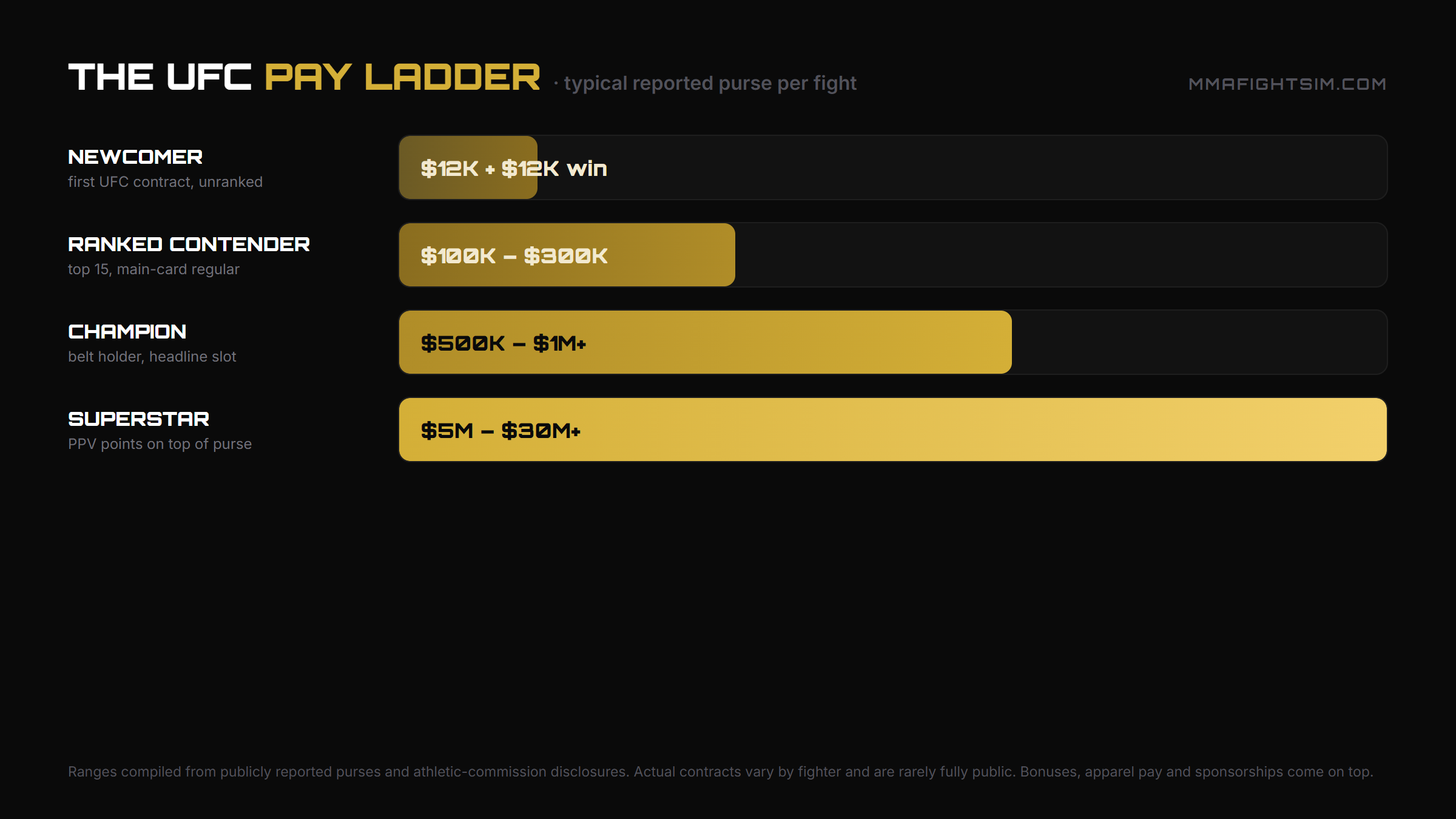
Entry-level deals have long started around $12,000 to show and $12,000 to win. That number shocks people every time it comes up, because it means a debuting fighter who loses might clear five figures before taxes for the hardest night of their life. Contender Series graduates typically start in this range too.
Climb into the rankings and things improve fast. A top-15 name on a main card commonly earns a reported $100,000 to $300,000 per fight with the win bonus included. Champions generally clear $500,000 to $1 million or more per defense, and that's before we talk about the real cheat code.
PPV points: where paydays go nuclear
The biggest stars negotiate pay-per-view points: a cut of every buy above a certain threshold, on top of their purse. This is the mechanism that separates the millionaires from the eight-figure club. It's also why superstars promote so hard. When Conor McGregor talks his way into an extra million buys, a meaningful slice of that money is his.
Reported superstar paydays, purse plus points plus incentives, have ranged from $5 million to north of $30 million for the sport's biggest draws. One name on a poster can out-earn an entire fight card. That's not an exaggeration; disclosed payrolls have shown headliners making more than every other fighter on the event combined.
What a fight check actually looks like
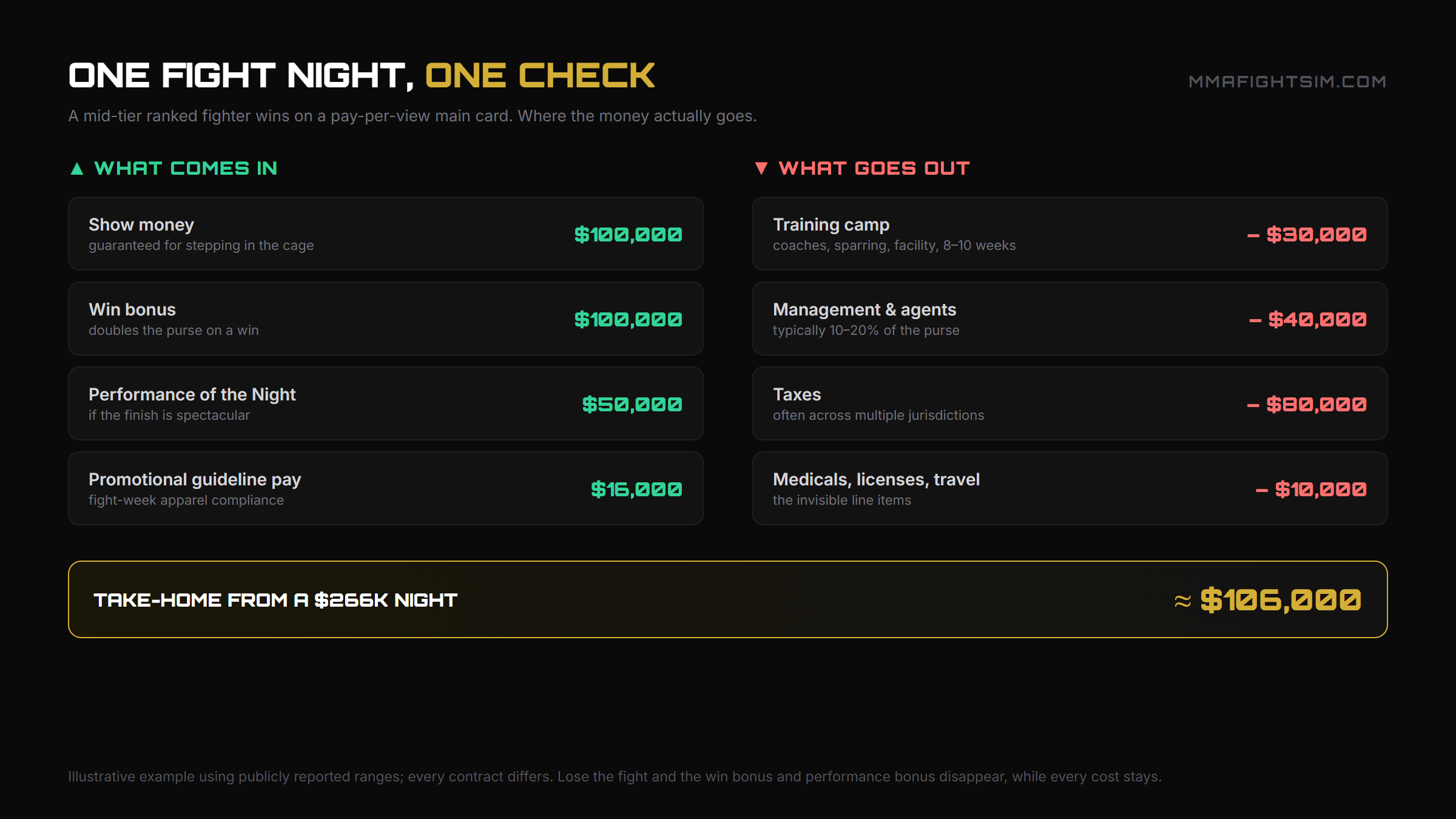
Here's the part casual fans never see: fighters are independent contractors who fund their own operation. An 8-to-10-week training camp with quality coaches and sparring partners costs real money. Management and agents typically take 10-20% of the purse. Taxes can hit in multiple jurisdictions depending on where the event is held. Medicals, licensing and flying your corner team out all come from the same pot.
Run the math on a good night for a mid-tier fighter and a $266,000 gross can become roughly $106,000 take-home. Now run the same math on a loss: the win bonus and the performance bonus disappear, the camp still cost $30,000, the managers still get paid, and suddenly a "six-figure UFC fighter" is looking at a very ordinary annual income from two or three fights a year.
Apparel pay and sponsorships
Since the UFC moved to exclusive outfitting deals, fighters earn structured promotional guideline pay per fight week, a flat tier based on their number of UFC bouts, reported to run from a few thousand dollars for newcomers up to the low forty-thousands for champions. It replaced the old free-for-all of banner sponsors, which some veterans say used to be worth far more to them than the replacement.
Outside the cage, personal sponsorships still exist, but they follow fame rather than rank. A viral knockout or a great mic moment can be worth more in endorsement money than three quiet wins.
Why the pay debate never dies
Whenever fighter pay comes up, one comparison always follows: athletes in the major American team sports collectively receive around half of league revenue, while MMA fighters' share of UFC revenue has been reported at a much lower slice, commonly cited under 20%. The counterargument is that the UFC carries the production, promotion and matchmaking machine that makes those paydays possible at all. Both sides have been arguing this for a decade, and nothing about it is settled.
What is settled: the gap between the bottom and top of the ladder is enormous, the costs are real, and the difference between winning and losing the same fight can be a factor of two on the paycheck. High stakes is the whole sport, right down to the bank account.
Frequently asked questions
What is the lowest UFC fighter salary?
Entry-level deals have typically started around $12,000 to show plus $12,000 to win, so a losing debut can pay roughly $12,000 before taxes and expenses.
How much does an average UFC fighter make per fight?
A ranked main-card regular commonly earns a reported $100,000 to $300,000 including the win bonus, before costs take their share.
Who is the highest-paid UFC fighter?
Conor McGregor's fight-night paydays, combining purse and PPV points, are the largest ever reported in the promotion, reaching well into eight figures for his biggest events.
Do fighters get paid if they lose?
Yes, they keep the guaranteed show money. But the win bonus, often half their potential purse, is gone, and every expense still gets paid.
Feel the economics yourself
Reading about purses is one thing; balancing a budget with them is another. In our free MMA Manager sim you're the one writing the checks: sign fighters, book cards and find out how fast a payroll eats a gate. Or live the other side in Career mode, where you start on small-show money and fight your way up the exact ladder in that first chart. And if you just want to argue about who's worth a $30 million payday, the fight simulator settles it in thirty seconds.